
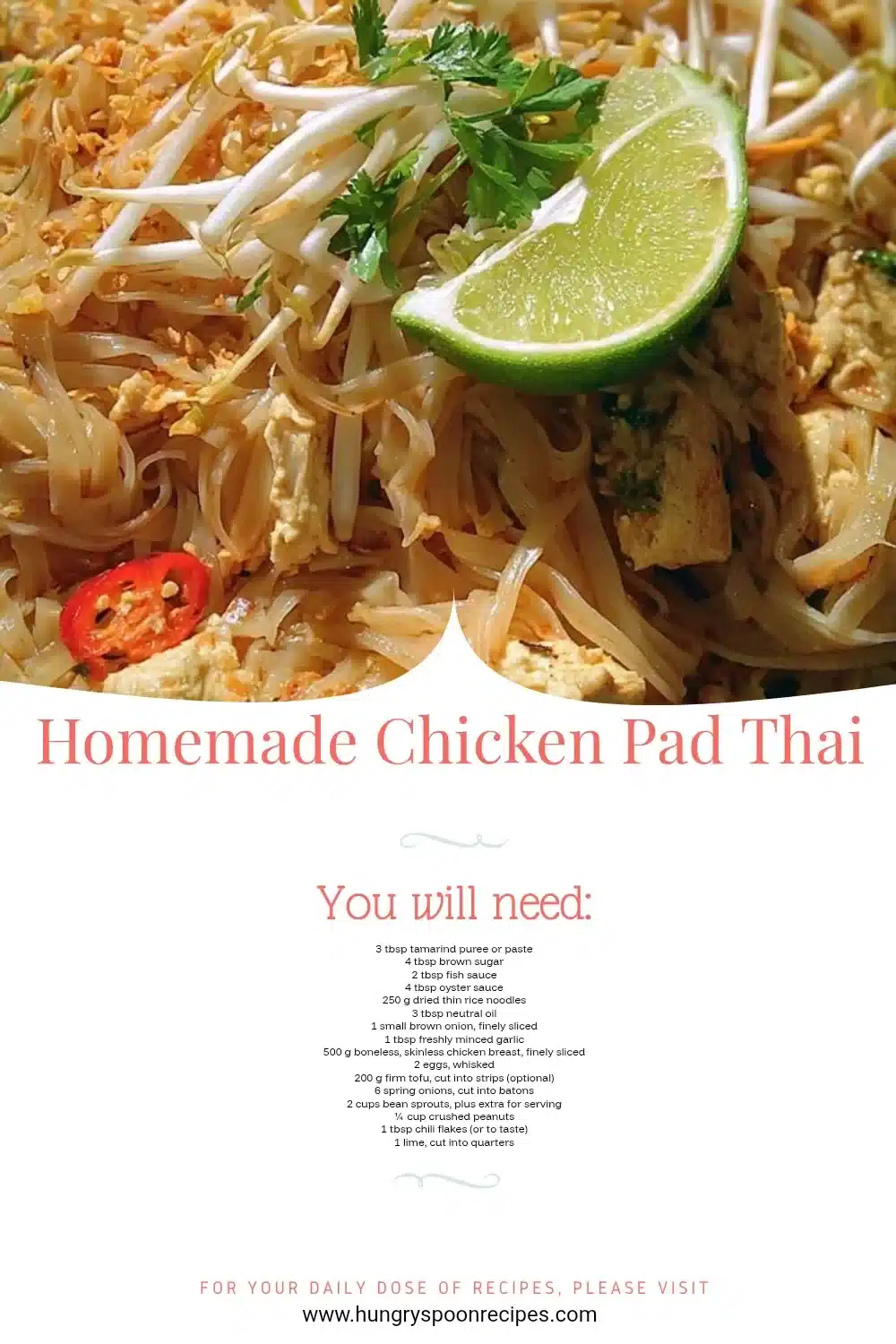
Homemade Chicken Pad Thai
why make this recipe
Homemade Chicken Pad Thai is a delicious and satisfying meal that anyone can make. It’s a wonderful blend of flavors with tender chicken, fresh vegetables, and chewy noodles, all coated in a tangy sauce. Making it at home lets you control the ingredients and adjust the flavors to your liking. This dish is perfect for weeknight dinners or special occasions when you want to impress your family and friends.
how to make Homemade Chicken Pad Thai
Ingredients:
- 3 tbsp tamarind puree or paste (see note 1)
- 4 tbsp brown sugar
- 2 tbsp fish sauce (see note 2)
- 4 tbsp oyster sauce
- 250 g (9 oz) dried thin rice noodles
- 3 tbsp neutral oil (see note 3)
- 1 small brown onion, finely sliced
- 1 tbsp freshly minced garlic
- 500 g (1 lb) boneless, skinless chicken breast, finely sliced
- 2 eggs, whisked
- 200 g (7 oz) firm tofu, cut into strips (optional)
- 6 spring onions (scallions), cut into 3 cm (1¼ inch) batons, white and green parts separated
- 2 cups (180 g) bean sprouts, plus extra to serve
- Extra bean sprouts
- ¼ cup (35 g) crushed peanuts
- 1 tbsp chilli (red pepper) flakes
- 1 lime, cut into quarters
Directions:
- Combine the ingredients for the pad thai sauce in a small bowl.
- Prepare the noodles by cooking them in a pot of boiling water until they are just pliable (for 1–2 minutes). Do not follow the noodle packet instructions, or your noodles will turn to mush! Rinse the noodles under cold running tap water until you have removed all the heat, then drain thoroughly in a colander. Set aside.
- Heat the oil in a large, deep, heavy-based pan over medium–high heat. Add the onion and garlic and cook, stirring, for 30 seconds, then immediately add the chicken. Cook the chicken for 1–2 minutes until it has just changed color (it will continue cooking with the other ingredients).
- Push the chicken to one side of the pan (add a little more oil if needed to the empty side if it is looking dry).
- Add the egg to the empty side of the pan and cook until it is scrambled/set, using your spoon to move the egg around the pan. Combine the egg with the chicken.
- Add the tofu, spring onion, the partially cooked noodles, and the sauce.
- Toss gently in the pan, using tongs, for 1–2 minutes until the sauce is coating all of the ingredients.
- Serve with extra bean sprouts, crushed peanuts, and chilli flakes on top. Squeeze with lime before serving.
how to serve Homemade Chicken Pad Thai
Enjoy your homemade Chicken Pad Thai hot. You can serve it in bowls with extra bean sprouts, crushed peanuts, and lime wedges on the side. This adds a fresh touch to the dish and enhances the flavors beautifully.
how to store Homemade Chicken Pad Thai
If you have leftovers, let them cool completely before storing. Place the Chicken Pad Thai in an airtight container and refrigerate. It can be stored for up to 3 days. To reheat, simply warm it in a pan over medium heat, adding a splash of water if needed to prevent sticking.
tips to make Homemade Chicken Pad Thai
- Be careful not to overcook the noodles. They should be slightly firm when you drain them, as they will cook a bit more in the pan.
- Adjust the sweetness and tanginess of the sauce according to your taste. You can add more sugar or tamarind if desired.
- Use high heat when cooking to give the dish a nice char flavor.
variation
For a vegetarian version, you can omit the chicken and use more tofu or other vegetables like bell peppers and carrots. You can also add your favorite proteins, such as shrimp or beef, for more flavor.
FAQs
Can I use fresh rice noodles instead of dried?
Yes, you can use fresh rice noodles. Just make sure to adjust the cooking time as they usually require less time to prepare.What can I substitute for fish sauce?
You can use soy sauce or a vegetarian fish sauce if you want to avoid fish products.Can I make this dish gluten-free?
Yes, just ensure you are using gluten-free soy sauce and make sure the rice noodles are gluten-free as well.