
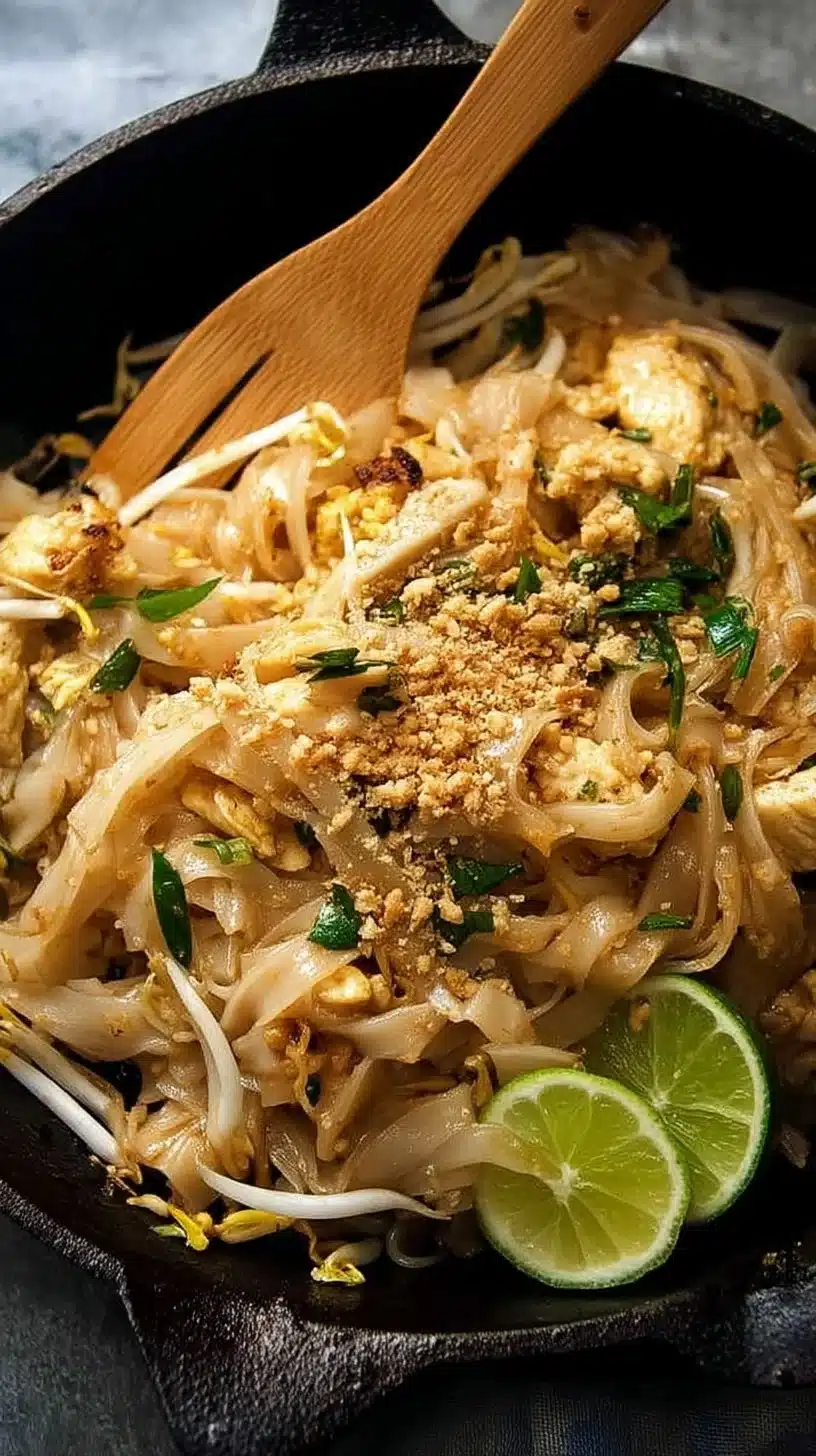
Pad Thai Recipe
why make this recipe
Pad Thai is a beloved dish from Thailand that combines sweet, sour, and savory flavors in a perfect balance. It’s simple to make and packed with delicious ingredients. Whether you’re cooking for yourself or entertaining guests, this dish is sure to impress. Plus, it’s great for using up leftover veggies or proteins you have in your fridge.
how to make Pad Thai
Ingredients
- 125 g / 4oz Chang’s Pad Thai dried rice sticks (Note 1)
- 1 1/2 tbsp tamarind puree, NOT concentrate (Note 2)
- 3 tbsp (packed) brown sugar
- 2 tbsp fish sauce (Note 3)
- 1 1/2 tbsp oyster sauce (Note 4)
- 2 – 3 tbsp vegetable or canola oil
- 1/2 onion, sliced (brown, yellow)
- 2 garlic cloves, finely chopped
- 150 g/5oz chicken breast (or thigh), thinly sliced
- 2 eggs, lightly whisked
- 1 1/2 cups of beansprouts
- 1/2 cup firm tofu, cut into 3cm / 1 1/4" batons
- 1/4 cup garlic chives, cut into 3cm / 1 1/4" pieces
- 1/4 cup finely chopped peanuts
- Lime wedges (essential)
- Ground chilli or cayenne pepper (optional)
- More beansprouts
Directions
- Place the noodles in a large bowl and pour over plenty of boiling water. Soak for 5 minutes, then drain in a colander and quickly rinse under cold water. Avoid letting them sit for more than 5 – 10 minutes.
- Mix the sauce ingredients in a small bowl.
- Heat 2 tbsp of oil in a large non-stick pan (or a well-seasoned skillet) over high heat.
- Add garlic and onion, and cook for 30 seconds.
- Add the chicken and cook for 1 1/2 minutes until mostly cooked through.
- Push the chicken to one side of the pan and pour the egg on the other side. Scramble the egg with a wooden spoon, adding a touch of extra oil if the pan is too dry. Then mix the scrambled egg into the chicken.
- Add the bean sprouts, tofu, noodles, and the sauce.
- Toss gently for about 1 1/2 minutes until the sauce is absorbed by the noodles.
- Add garlic chives and half the peanuts. Toss quickly then remove from heat.
- Serve immediately, sprinkled with remaining peanuts and lime wedges on the side. Optionally, add a sprinkle of chilli and a handful of extra bean sprouts. Squeeze lime juice over the dish to taste before eating.
how to serve Pad Thai
Pad Thai is best served hot and fresh. You can put it on plates or in bowls, and all the toppings like lime wedges, peanuts, and bean sprouts will add to its appeal. This dish can be a complete meal on its own, but you can always pair it with a refreshing salad or some spring rolls.
how to store Pad Thai
If you have leftovers, you can store Pad Thai in an airtight container in the fridge. It will last for about 2-3 days. Reheat it gently in a pan over low heat, adding a little bit of oil or water to help loosen it up.
tips to make Pad Thai
- Make sure the noodles are not over-soaked, as they can become mushy.
- Feel free to add other proteins such as shrimp or beef, or keep it vegetarian by using more tofu.
- Adjust the level of sweetness and acidity in the sauce to match your taste.
- Always use fresh lime for the best flavor.
variation
You can customize your Pad Thai by using different proteins or vegetables. Try shrimp, beef, or a mix of colorful veggies like bell peppers and carrots. For a vegetarian option, simply omit the chicken and chicken broth.
FAQs
Can I make Pad Thai ahead of time?
Yes, you can prepare the ingredients in advance and cook it just before serving for the best texture.Is Pad Thai gluten-free?
If you use rice noodles and a gluten-free soy sauce or fish sauce, then yes, Pad Thai can be gluten-free.What can I substitute for tamarind puree?
You can use a mixture of lime juice and brown sugar as a substitute for tamarind puree, though the flavor will be slightly different.