
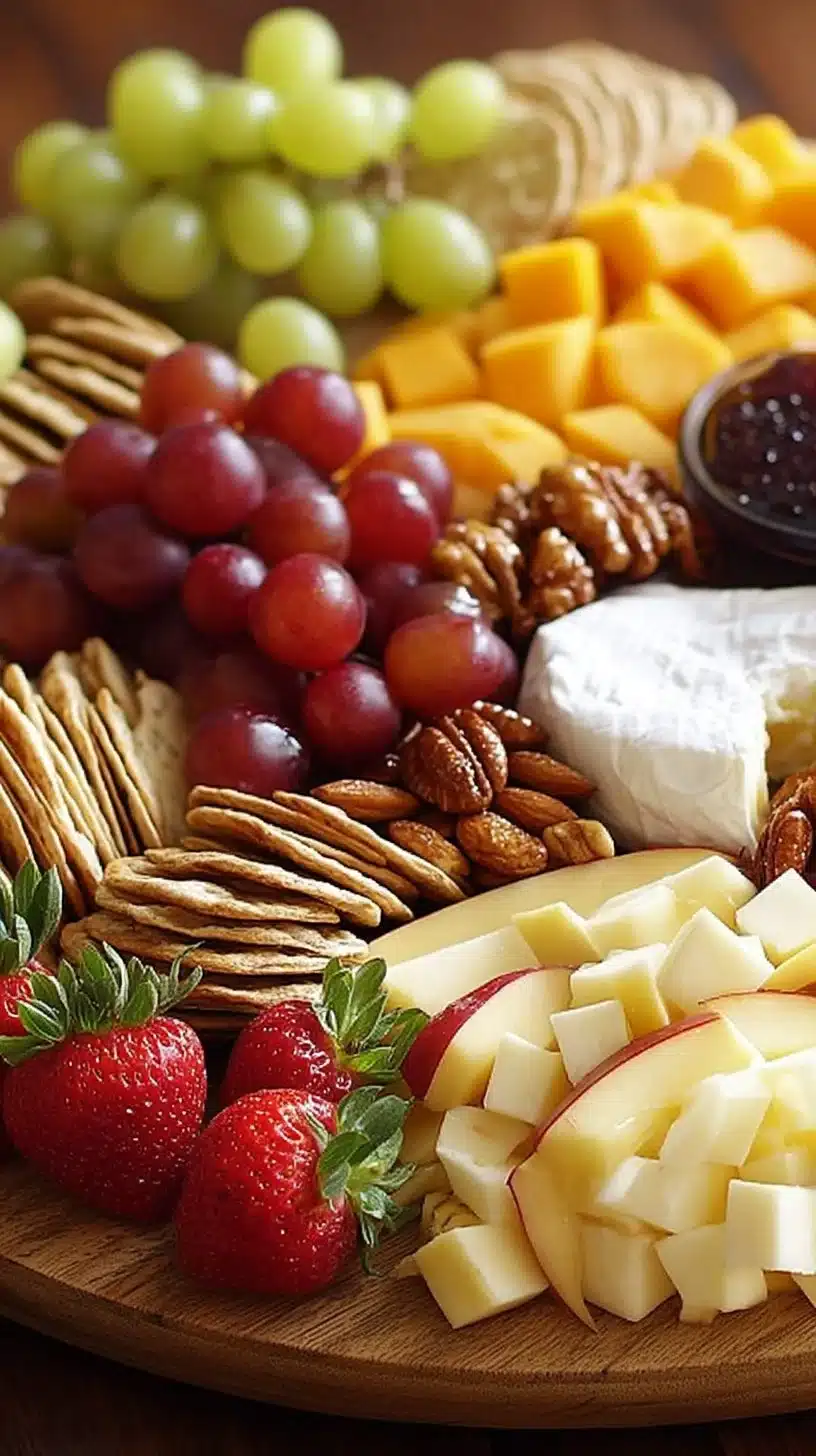
Fruit and Cheese Platter
Thought you needed a chef’s toque to pull off a Fruit and Cheese Platter? Think again. Welcome to the nerdy joy of arranging snacks that look like art and taste like bribery—er, I mean love. I’ll walk you through the fun science of pairing sweet fruit, creamy cheese, and crunchy nuts so your friends think you’re a genius (no lab coat required).
Want something extra cozy on the side? I sometimes throw this platter next to my go-to comfort dish—try my easy mac and cheese recipe for full-on snack-supreme vibes.
Why You’ll Love This
This platter is pure versatility: it’s elegant enough for guests and lazy enough for Netflix nights. You get sweet, salty, creamy, and crunchy in one go—major flavor fireworks with minimal effort. Also, it’s one of those dishes that rewards creativity: swap one fruit, and everything changes in the best way.
Fun fact time: cheese and fruit pairings are basically a tiny gastronomic romance that’s been happening for centuries. Grapes and cheese? Classic. Figs and blue cheese? Drama in the mouth. Knowing a few pairings lets you look like a sommelier without the three-year degree. Ready to geek out a bit while you snack?
Your Shopping List
- Assorted cheeses: cheddar (sharp), brie (soft & creamy), gouda (nutty), and a blue or goat cheese for character. Mix textures.
- Fresh fruits: grapes, strawberries, apple slices, figs (fresh if you can), and citrus segments for brightness.
- Nuts: almonds, walnuts, pistachios—toast if you’re feeling fancy.
- Honey or fig jam: for drizzling and dipping—essential for crowd-pleasing contrast.
- Crackers and/or bread: a mix of plain and seeded.
- Optional extras: olives, charcuterie (if you’re into it), fresh herbs like rosemary or basil for garnish.
A little style note from your resident food nerd: choose cheeses with distinct textures and milder-to-bolder flavors so everyone can explore flavor progressions like it’s a small edible museum.
Cook It Like a Pro
- Place cheeses first. Position one wedge of brie, a block of cheddar, a slice of gouda, and a crumbled blue/goat cheese on a large wooden board or platter. Leave space between them—you’ll fill the gaps.
- Add fruit in clusters. Put grapes in bunches, fan apple slices so they look like a mini fanned-out sail, and tuck strawberries near softer cheeses (they complement creaminess). Think in groups, not lines.
- Fill with nuts and crackers. Scatter roasted almonds and walnuts to create texture islands. Place crackers in small stacks or lean them against cheese for easy grabbing.
- Small bowls for spreads. Spoon honey and fig jam into little bowls and set them near complementary cheeses—honey by goat or blue cheese, fig jam next to brie.
- Garnish and accessorize. Top brie with a sprig of rosemary or a drizzle of honey. Add toothpicks or small cheese knives so people don’t wrestle for bread.
- Serve at room temp. Take cheeses out 30–60 minutes before serving—warm cheese = better flavor. Watch your guests’ eyes light up.
Avoid These Fails
- Don’t serve everything straight from the fridge. Cold cheese hides flavor—let it breathe.
- Don’t overcrowd the board. A messy cluster isn’t organic; it’s panic. Leave breathing room so people can actually get to stuff.
- Avoid matching too many intense flavors together. Two super-bold blues? That’s just blue chaos. Balance is the secret handshake here.
- Don’t forget utensils. I’ve seen people try to stab brie with their fingers—awkward and unappetizing.
Tweak It Your Way
- Vegan? Swap cheeses for nut-based cheeses and add marinated artichokes and roasted red peppers.
- Need a sweet twist? Add dried apricots, honeycomb shards, or a dark chocolate chunk cluster.
- Want a savory tilt? Toss in prosciutto, pickles, and grainy mustard.
- Gluten-free? Replace crackers with crisp apple slices or seed crackers—still crunchy, still fun.
- Seasonal swaps: in summer, add stone fruit and berries; in fall, use pears and roasted squash seeds.
Curious? Here’s Answers
Q: Should I cut all the cheeses beforehand?
A: Some yes, some no. Cut harder cheeses; leave wedges of brie and wheels partially intact so guests can slice as they please. Presentation + practicality = win.
Q: How long can I prep in advance?
A: Prep components (wash fruit, toast nuts, slice hard cheese) up to a day ahead, but assemble the board right before guests arrive. Too early = soggy crackers. You clever planner, you.
Q: Any rules about which fruit goes with which cheese?
A: Rules are suggestions. But here’s a tip: acidic fruits (citrus, apple) play well with sharp cheddar; sweet fruits (figs, dates) love blue; creamy cheeses adore berries.
Q: Can I make this for a meal?
A: Totally. Add charcuterie, a hearty bread, and some olives, and you’ve got a full grazing meal. Cheese board dinner club, anyone?
Q: What’s the best platter for this?
A: Wood or slate boards are classic. But TBH, a clean baking sheet works in a pinch—style > tool, within reason.
Q: How do I keep fruit from browning?
A: Toss apple slices with a little lemon juice or dunk in citrus water for a few minutes. Science saves snack aesthetics.
Q: Are there any allergy-friendly tips?
A: Offer a nut-free section and label things. Keep spreads separate and consider using separate knives for cheeses with different profiles.
Time to Feast
Okay, you’re armed with cheese wisdom and the will to arrange snacks like a joyful scientist. This platter feeds curiosity and appetites—perfect for dates, parties, or solo victory snacks. Remember: bold pairings and a little asymmetry make the platter pop.
Go forth, assemble, and take unapologetic credit when people swoon. And if someone asks for the recipe, wink and say, “It’s a lifestyle.”
Conclusion
If you want a deeper step-by-step visual guide or extra inspiration, check out this helpful tutorial on how to make a fruit & cheese platter —it’s full of photos and ideas to level up your snack game.
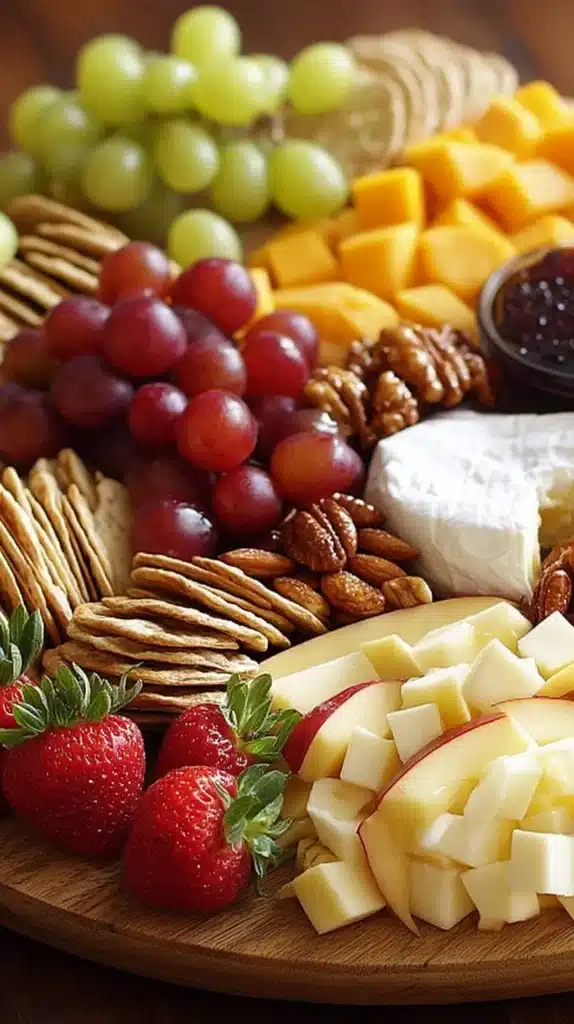
Fruit and Cheese Platter
Ingredients
Method
- Place cheeses first on a large wooden board or platter, leaving space between each.
- Add fruit in clusters: put grapes in bunches, fan apple slices, and tuck strawberries near softer cheeses.
- Scatter nuts around the board to create texture islands.
- Use small bowls for honey and fig jam, placing them near complementary cheeses.
- Garnish with fresh herbs and provide utensils for easy serving.
- Serve at room temperature for best flavor.